
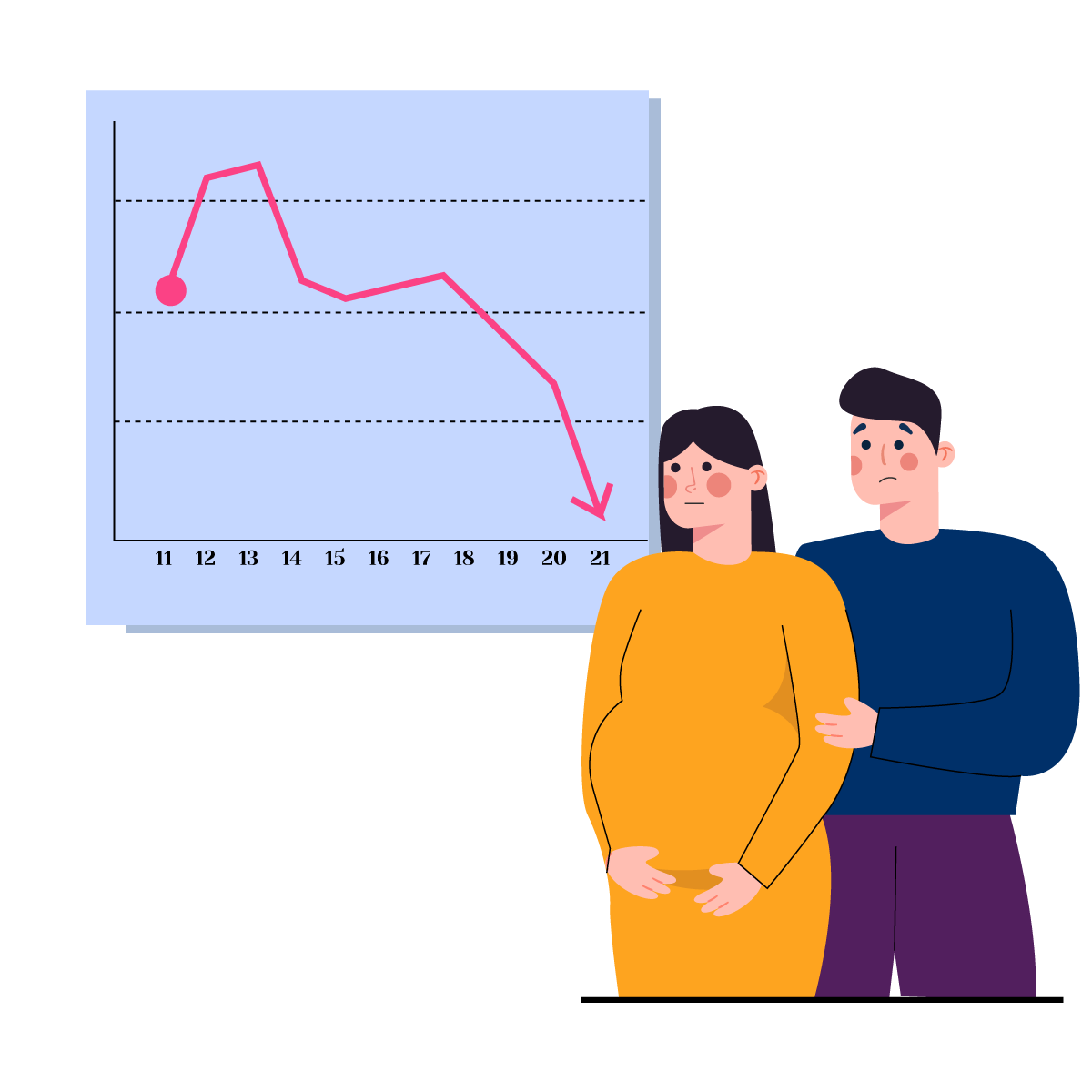
Fertility generally starts to slowly decline when a woman is in her early 30s, and after the age of 35 the decline speeds up.
Age plays a significant role in a couple’s ability to conceive. While both men and women experience changes in fertility as they grow older, the impact is more pronounced in women.
Fertility is not constant throughout life. As we age, natural biological changes reduce the chances of conception. This is primarily due to the decline in egg quality and quantity in women and gradual sperm quality changes in men.
While age is just one factor, it’s an important one. Planning a family earlier can reduce complications and improve success rates. For those who are older, consulting a fertility specialist and exploring options like egg or sperm freezing, IVF, or ICSI can make a big difference.